Sea of Cortez (Part 2)
April 29th - May 24th, 2025
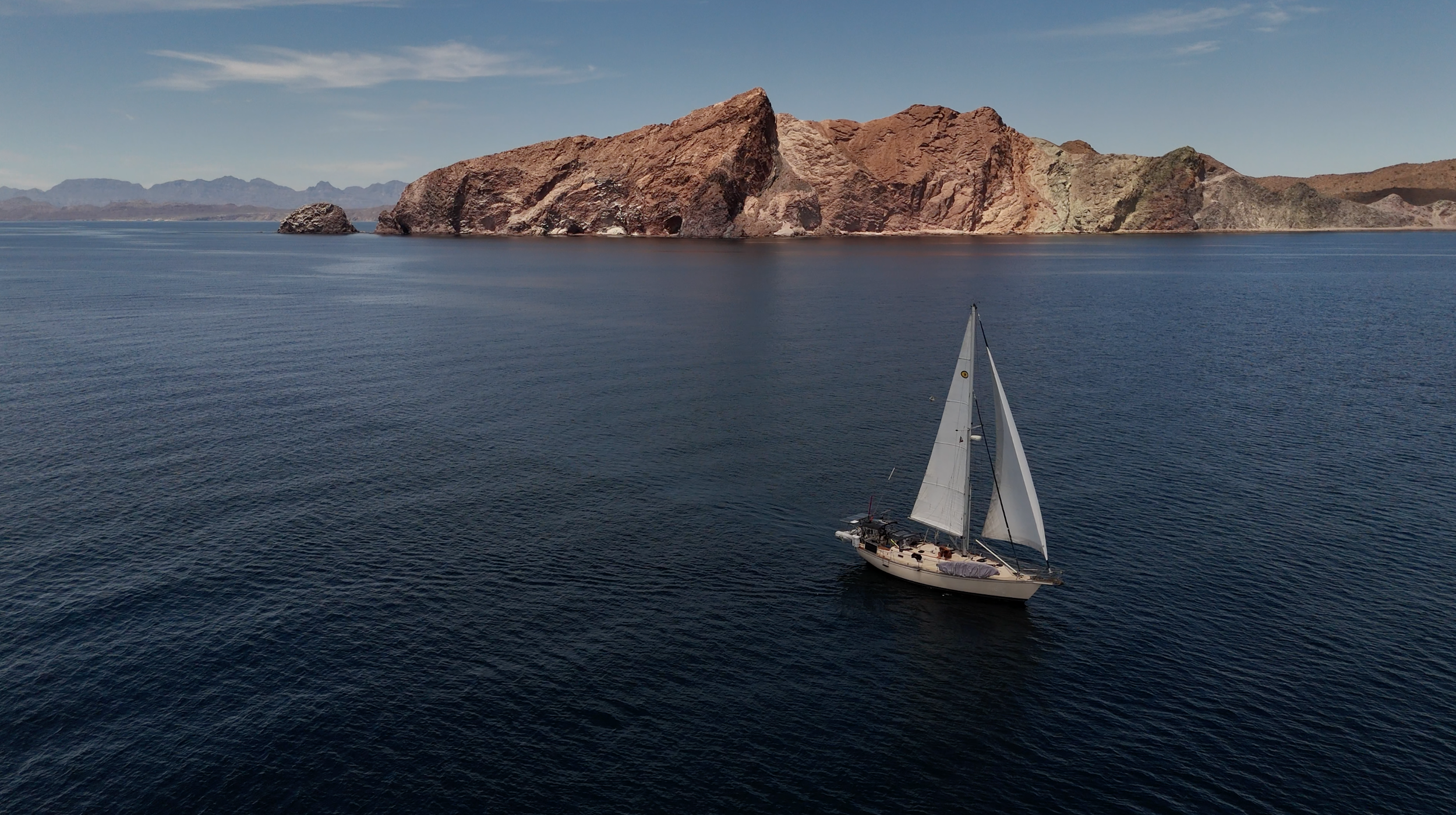
It was a beautiful, clear day at the end of April when we departed Bahía Agua Verde, on the east side of the Baja Peninsula, and sailed north to Isla Carmen, an island 20 miles long with many beautiful anchorages. We sailed first to Punta Colorada, an anchorage on the southeastern side of the island, five hours from Agua Verde. I worked underway, clocking out just in time to enjoy the last half hour of sailing and to assist in anchoring. This area of the island is privately owned, so we didn’t go ashore, but enjoyed the view of the remote desert landscape from the boat. Karl went fishing in the dinghy during the day, and I paddleboarded along the edge of the island after work, with water so clear that I could see all the fish swimming around the rocky shelf below.
After a couple of days, we sailed to Punta Perico, an anchorage on the northeast end of the island. We made the three-hour trip in the evening, so I would be off work to enjoy part of the sail, and saw many flying fish and sting rays along the way. As we slowly headed toward shore and were about to drop anchor, the boat suddenly stopped advancing. Though we had been in 18 feet of water only seconds before, we found that we were firmly grounded on a rock. The tide was rising, which was in our favor, and after dropping the dinghy to relieve some weight off our stern, we were able to shake free and find deeper water just before dark. Luckily, due to our slow speed, the keel showed only surface scratches when Karl dove to inspect it the next day. Punta Perico was a beautiful spot with calm waters and large, pale cliffs that towered above us. A couple of boats joined us in the anchorage, Karl spent the day fishing and playing on the beach with Desi, and I swam and snorkeled the reef after work.
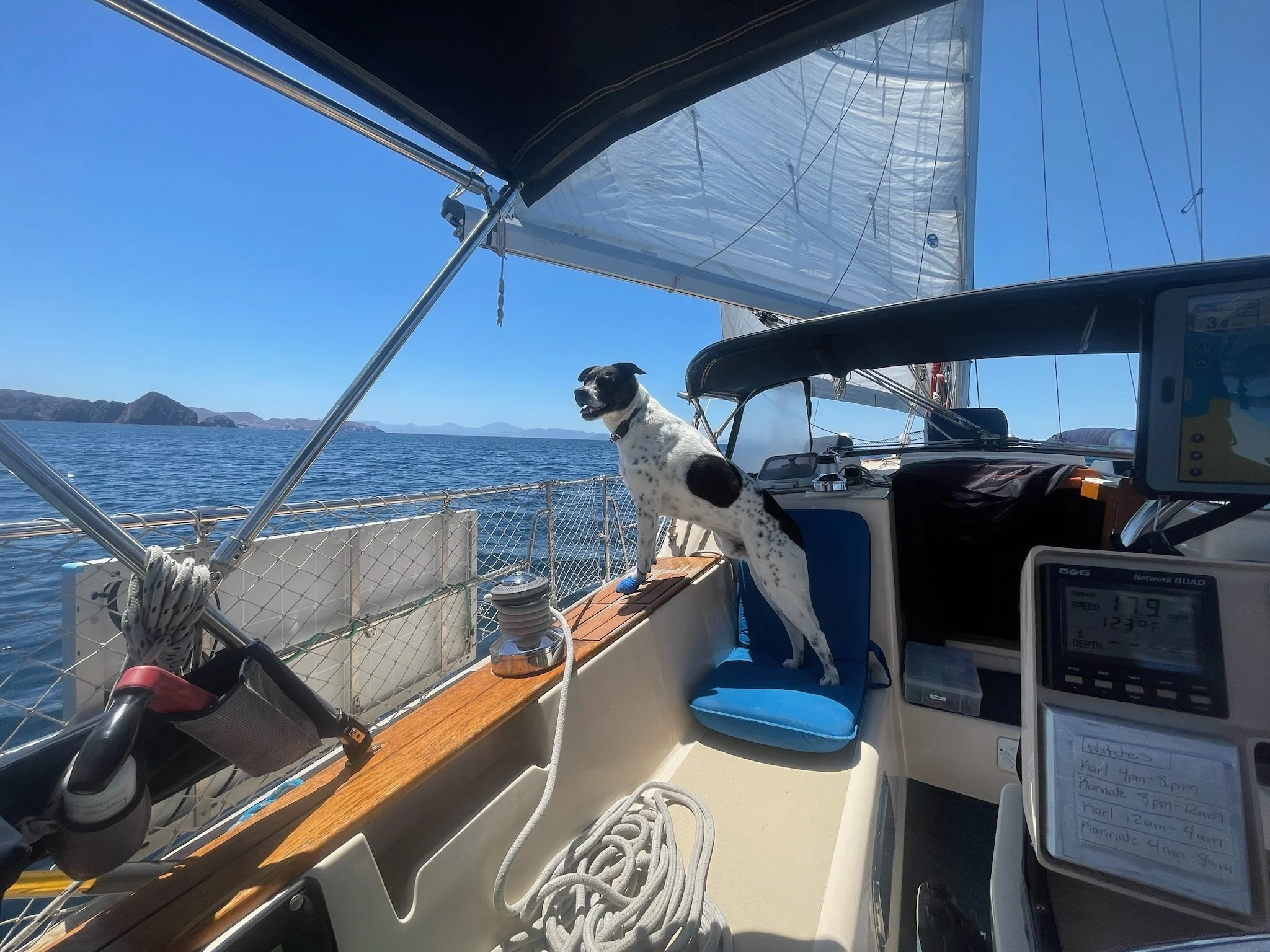
On the weekend, we departed for the town of Loreto on the Baja mainland, sailing around the northeast tip and down the length of Isla Carmen. It was an eventful trip that started with winds so light that Karl braved his fear and flew the drone while under sail for the first time. Soon after, I noticed spots of blood on the deck and discovered that poor Desi had a shard of glass embedded in his paw. Removing glass from a dog’s paw without sedation while sailing is not an easy task, and I was near tears for putting him through it, but we got it out, the wound cleaned and bandaged, and a few stinky treats later, all was forgiven.
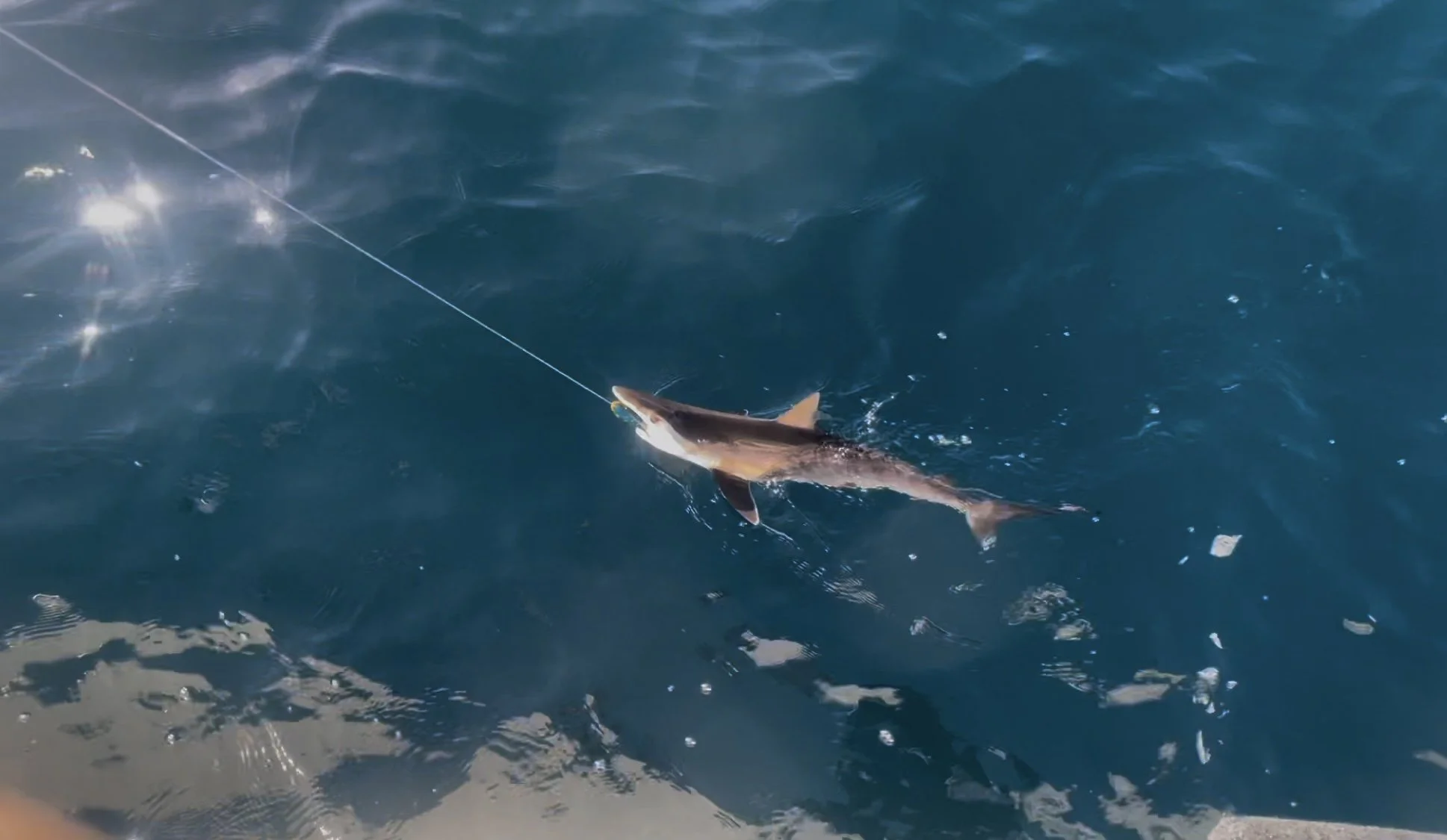
Later, as we rounded the tip of the island, I was startled out of my mind when a large shark shot several feet out of the water, just a few yards from the boat. I yelled for Karl, who had heard the splash, but didn’t believe it was a shark until the same thing happened again, slightly further away, and then again a few hours later. Funny, we never knew that sharks breached like dolphins and whales! Toward the end of our trip, we encountered another shark, this time hooked on one of our fishing lines. It was just a baby, and we quickly released it, joking that we didn’t want the mom shooting out of the water at us to take revenge.
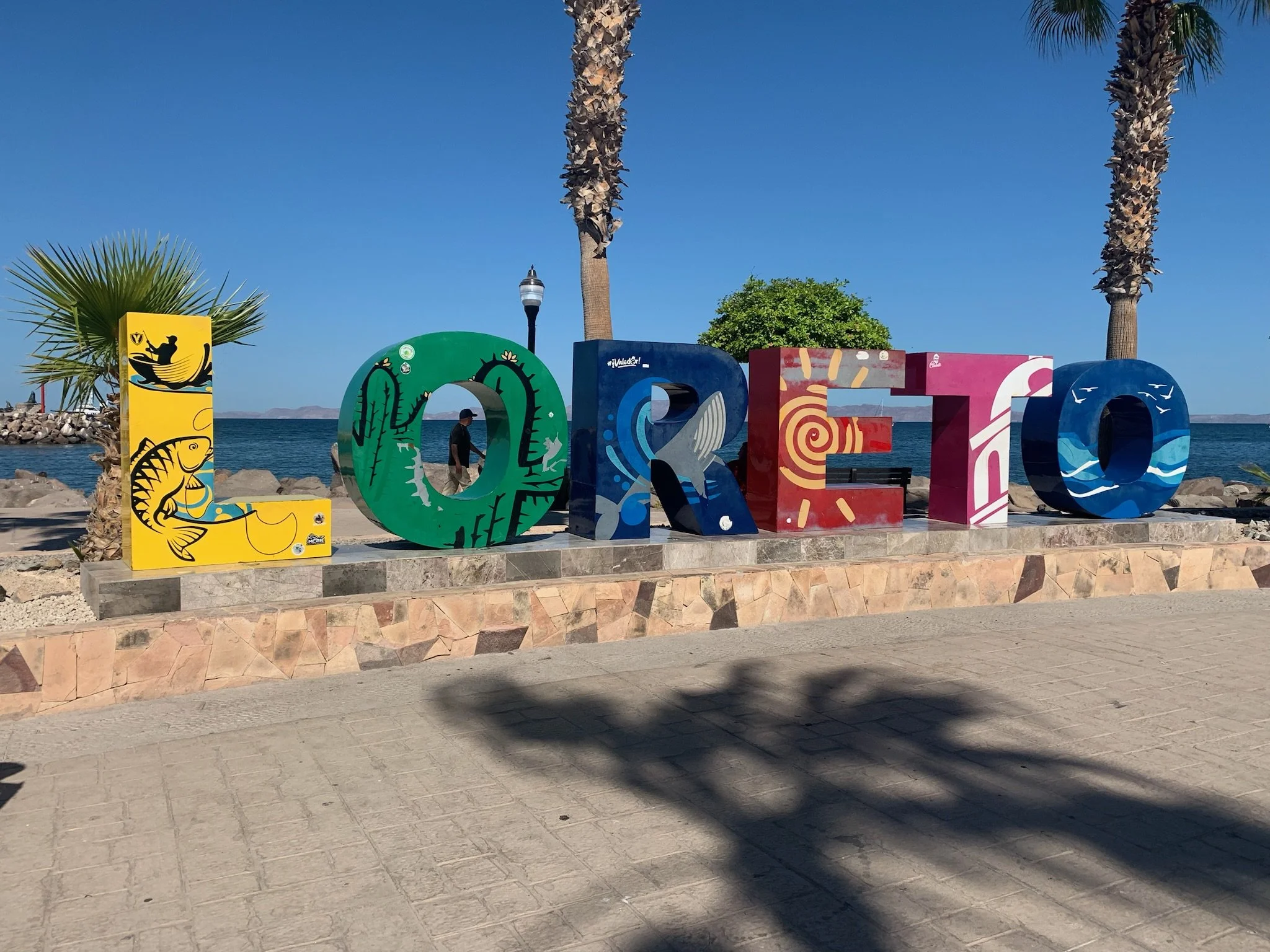
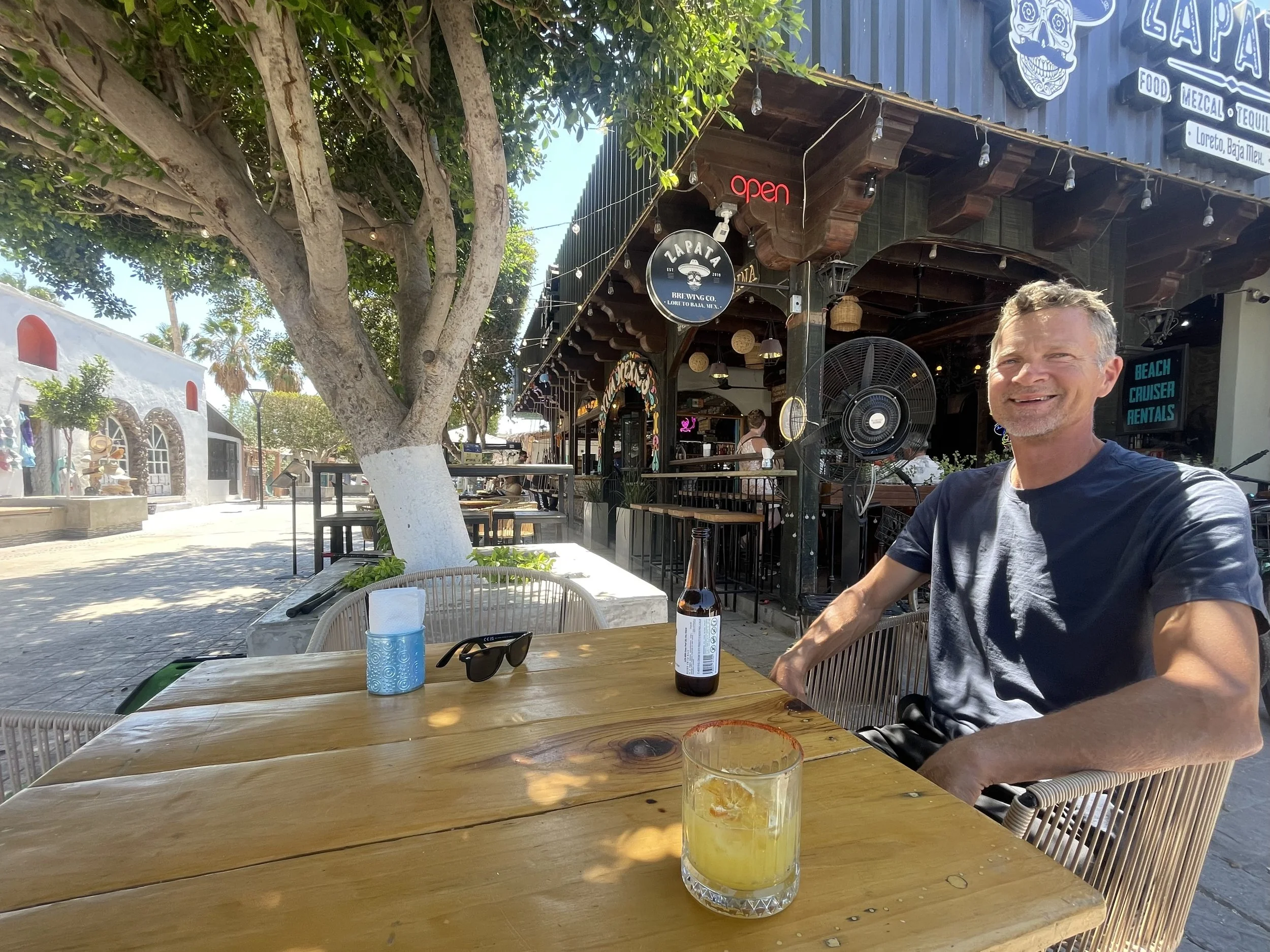
We arrived in Loreto just before sunset and dropped anchor off the beach to the north of the harbor. Loreto is an open roadstead anchorage, with little protection from wind or swell, so our stay there was brief. After an unfortunate 7 a.m. wake-up from harbor patrol the next morning, who requested we relocate to the more southern anchorage, we reluctantly moved the boat, before dropping the dinghy and venturing into town. Loreto is a very pretty town, and we had a lovely day wandering into the shops, treating ourselves to cocktails and tacos, and picking up a few groceries. A women’s fishing tournament was taking place that weekend, and a crowd of boats with women in matching pink sun shirts returned to the harbor in the afternoon to weigh their catches and receive awards at a lively waterfront event. Back aboard in the evening, the party music on shore carried across the water, and we fell asleep to an odd variety of 90s hit song remixes.
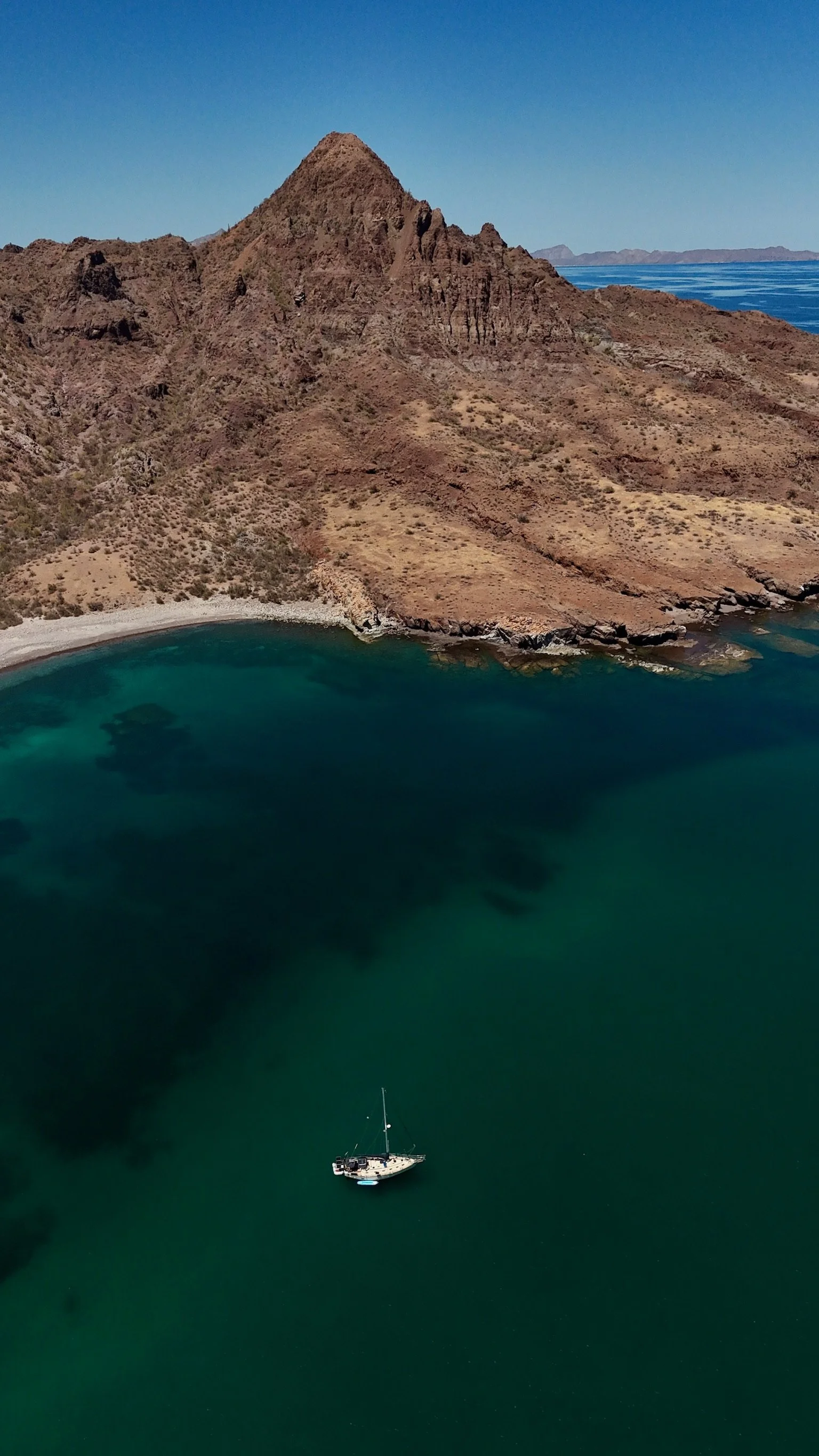
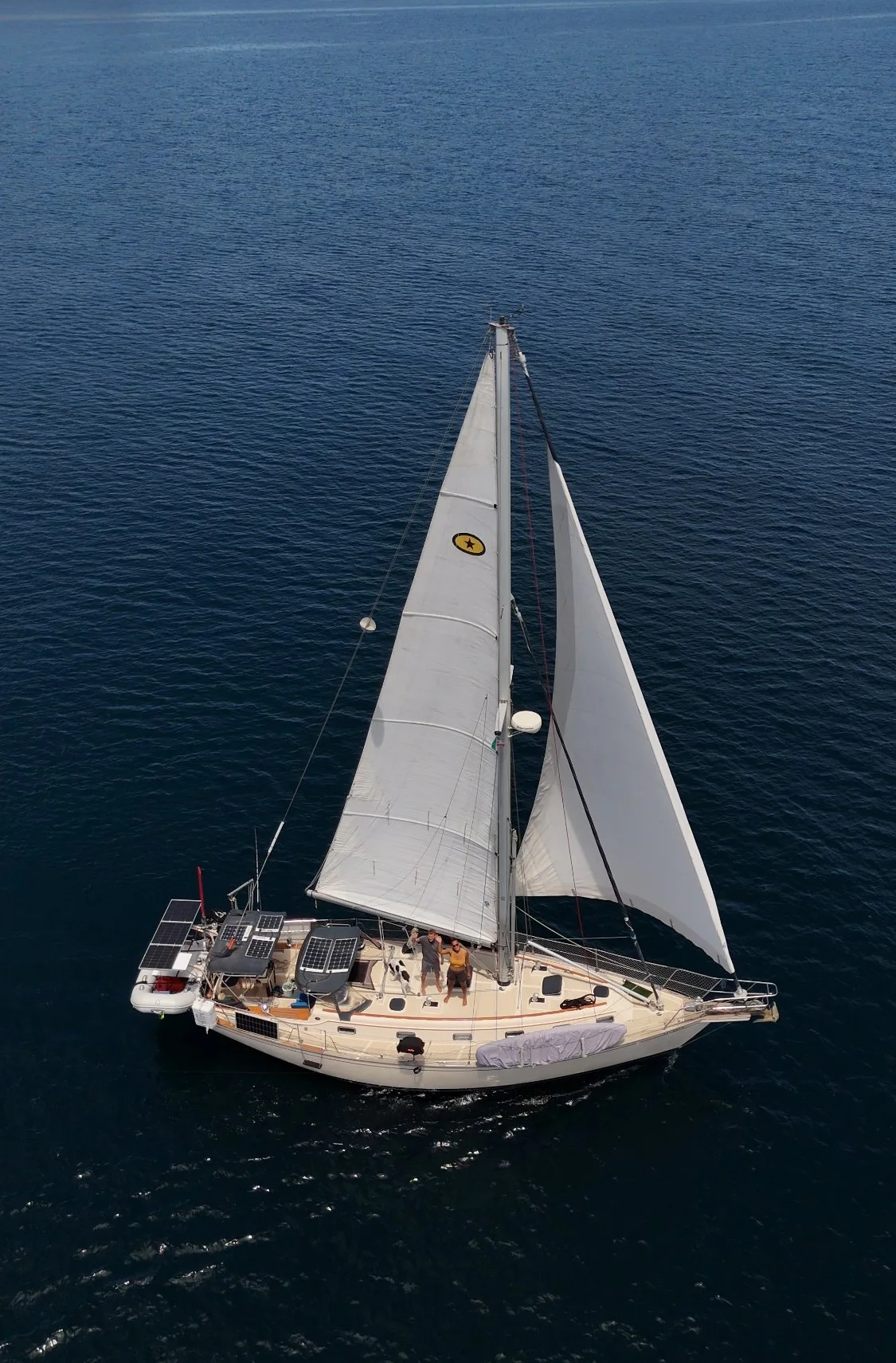
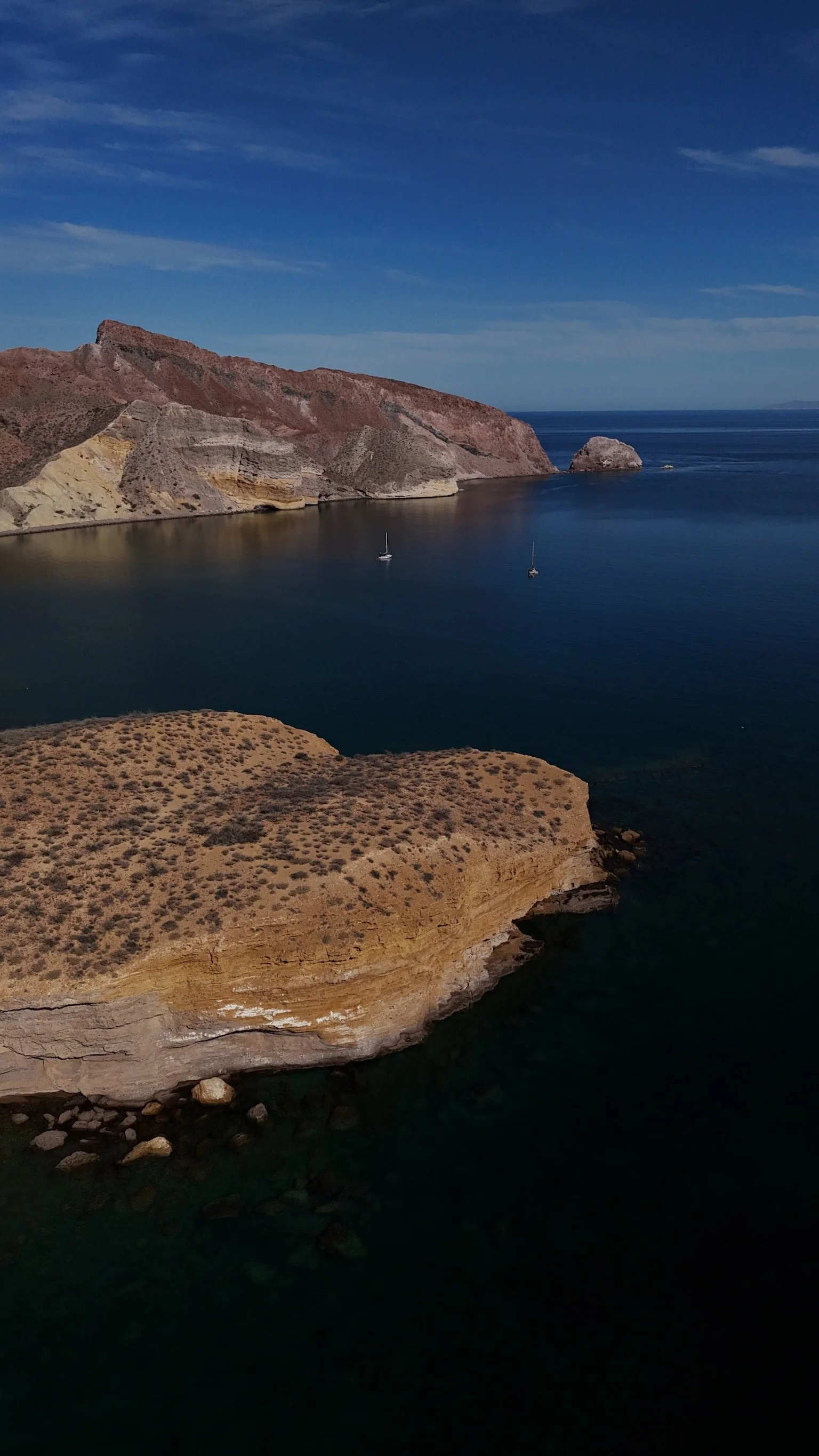
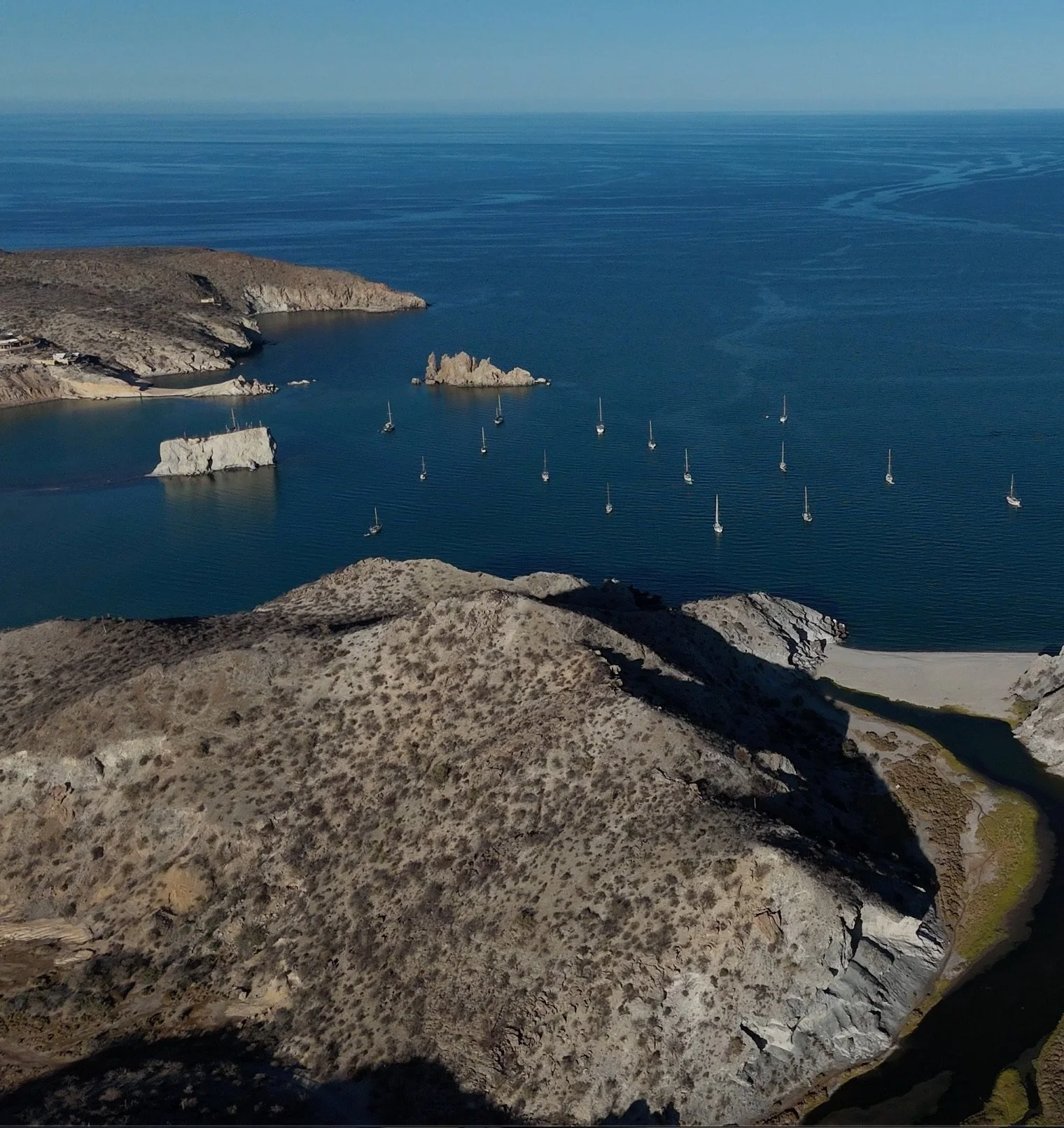
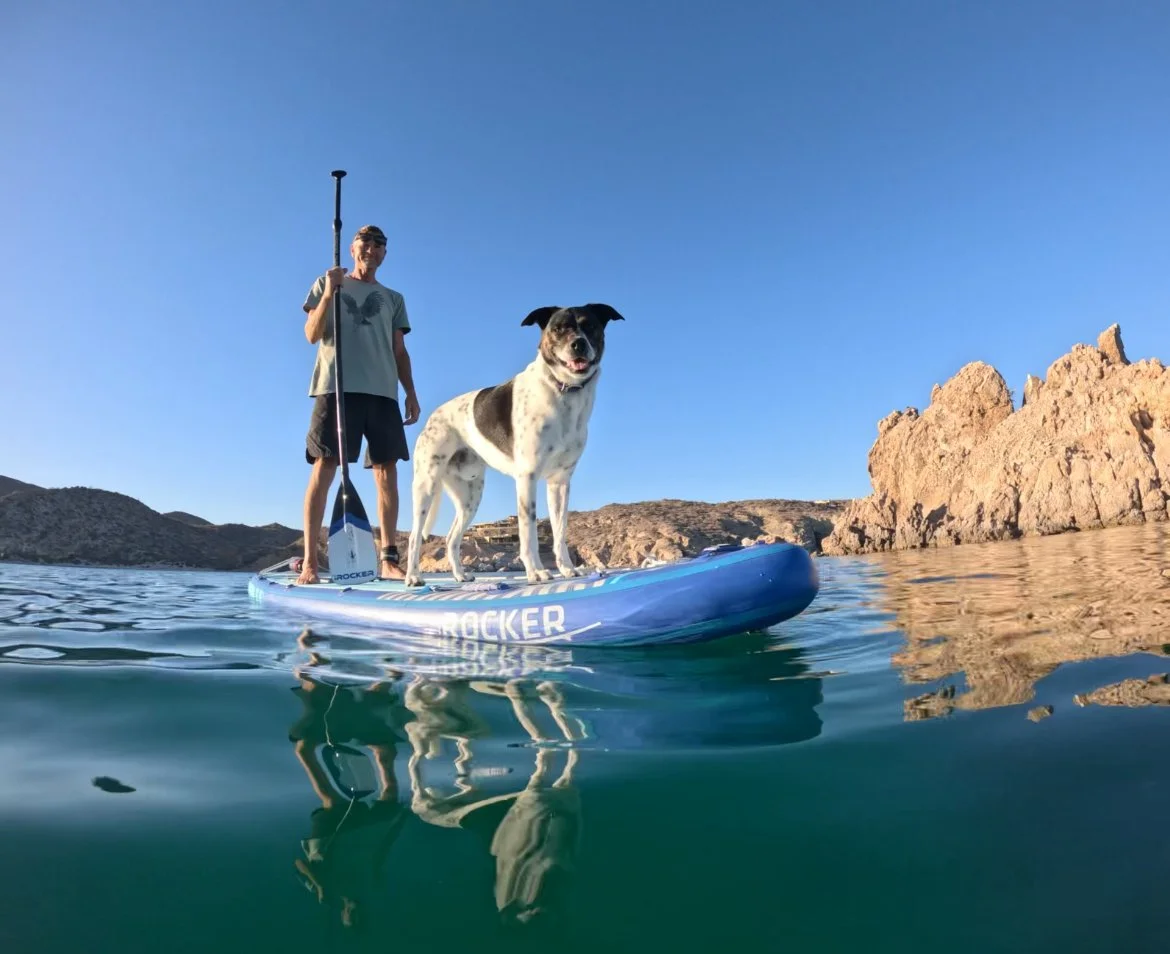
From Loreto, we left midweek on my lunch break, and Karl sailed the boat through the shallow waters between the mainland and Isla Coronado, up the coast to Caleta San Juanico. The seas became livelier in the last few hours, and we were glad to find a spot to tuck in among a handful of other boats in the cove, surrounded by beautiful beaches and interesting rock formations. Over the next couple of days, the half dozen boats increased to over twenty, as we all waited out some strong northerly winds. We spent evenings snorkeling, paddleboarding, and playing on the beach with Desi. Karl started some part-time contract work, and we watched the sunset lounging in our hammocks on deck.
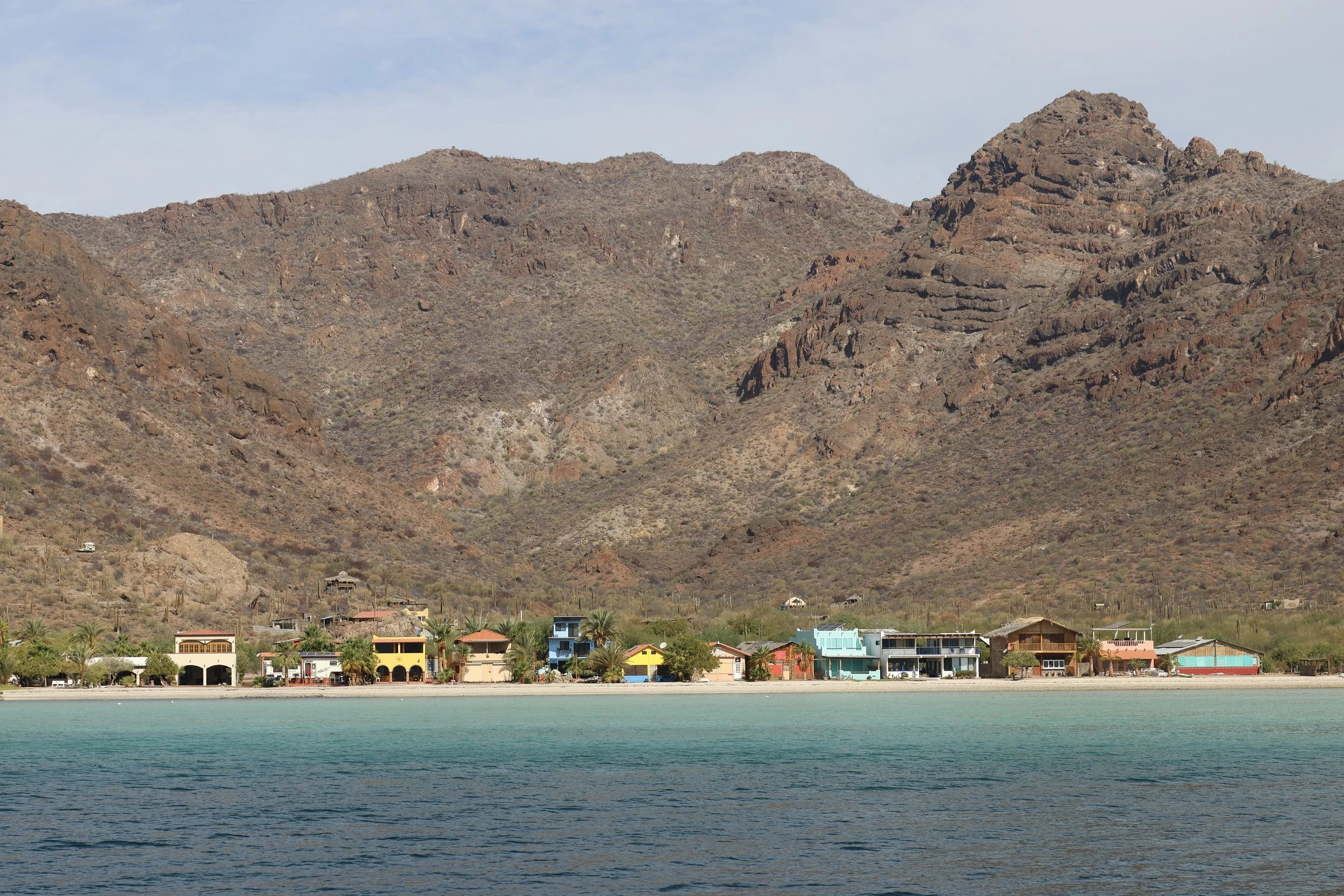
The next leg of our trip was a longer sail, 11 hours north into Bahía Concepción, a long bay protected by a 25-mile-long peninsula. We had light winds at the start, but toward the end of the day, they increased substantially, and we had some great sailing around the point and into Concepción. We anchored about halfway down the bay at Playa El Cayote, in a picturesque cove with small homes and seasonal camps lining the beachfront between large rocky hills. A short dinghy ride away was another anchorage at Playa El Burro, where small palapas lined the beach a few yards from the tide line, and we enjoyed an evening out at a palapa restaurant. Karl explored during the day while I worked, took Desi to shore to run, and spent a day diving on the hull to scrape off the marine growth. In the evening after work, I swam to the rocky shoreline and snorkeled the reef where the intricate coral looked like layers of delicate lace.
Hurricane season in Mexico begins in June, and although hurricanes in the Sea of Cortez in the early summer months are rare, our insurance required that we provide and follow a plan to be in a protected area during the storm season. Our stated plan was to sail all the way north to Puerto Penasco, near the Arizona border, where we had a reservation to haul our boat out of the water and store it while traveling by land in the U.S. over the summer. Because of this plan and my work schedule, we had been timing our progress northward to ensure we would arrive by June. However, a few days into our stay in Bahía Concepción, we received news that the hydraulic lift at the boatyard in Puerto Penasco had broken while lifting a boat. Luckily, no one was injured, and the yard was working to execute a repair quickly. However, even a few weeks of repair time meant pushing all reservations back, leaving no chance of us being hauled out by the start of hurricane season. To complicate things, Karl had work in early June that would require him to travel back to the States, and with limited marina facilities and no safe anchorages due to an extreme tidal change of up to 23 feet, Puerto Penasco was a poor place to spend weeks waiting.
After much discussion, we formulated a new plan. We would continue north to Santa Rosalia for provisions, then cross the sea to San Carlos on the Mexico mainland, one of the few places in the area considered safe during hurricane season. Here, I would stay at anchor while Karl traveled, after which we would decide whether to make the trip up to Puerto Penasco or haul out for the summer in San Carlos. With this plan in mind, we had less distance to travel over the coming weeks, so we extended our stay in Bahía Concepción, visiting two other anchorages: Requesón and Santispac.
The trip to Requesón was unexpectedly rough, as north winds filtered down the long bay and steep waves began to build. Because the anchorage was so shallow, we were unable to tuck in far enough to be out of the wind and had a rough afternoon before the winds calmed down and we could enjoy ourselves. We rowed the dinghy to shore with Desi and met some campers who also had an Island Packet back on the East Coast. It’s always fun to meet people who are looking out at our boat, dreaming of living the cruising life, because it reminds us of just a few years ago when we were doing the same. Walking the docks and looking out at anchorages, we used to dream of that being our life, elated when someone aboard would take time to answer our questions, give us a boat tour, or share some of their stories.
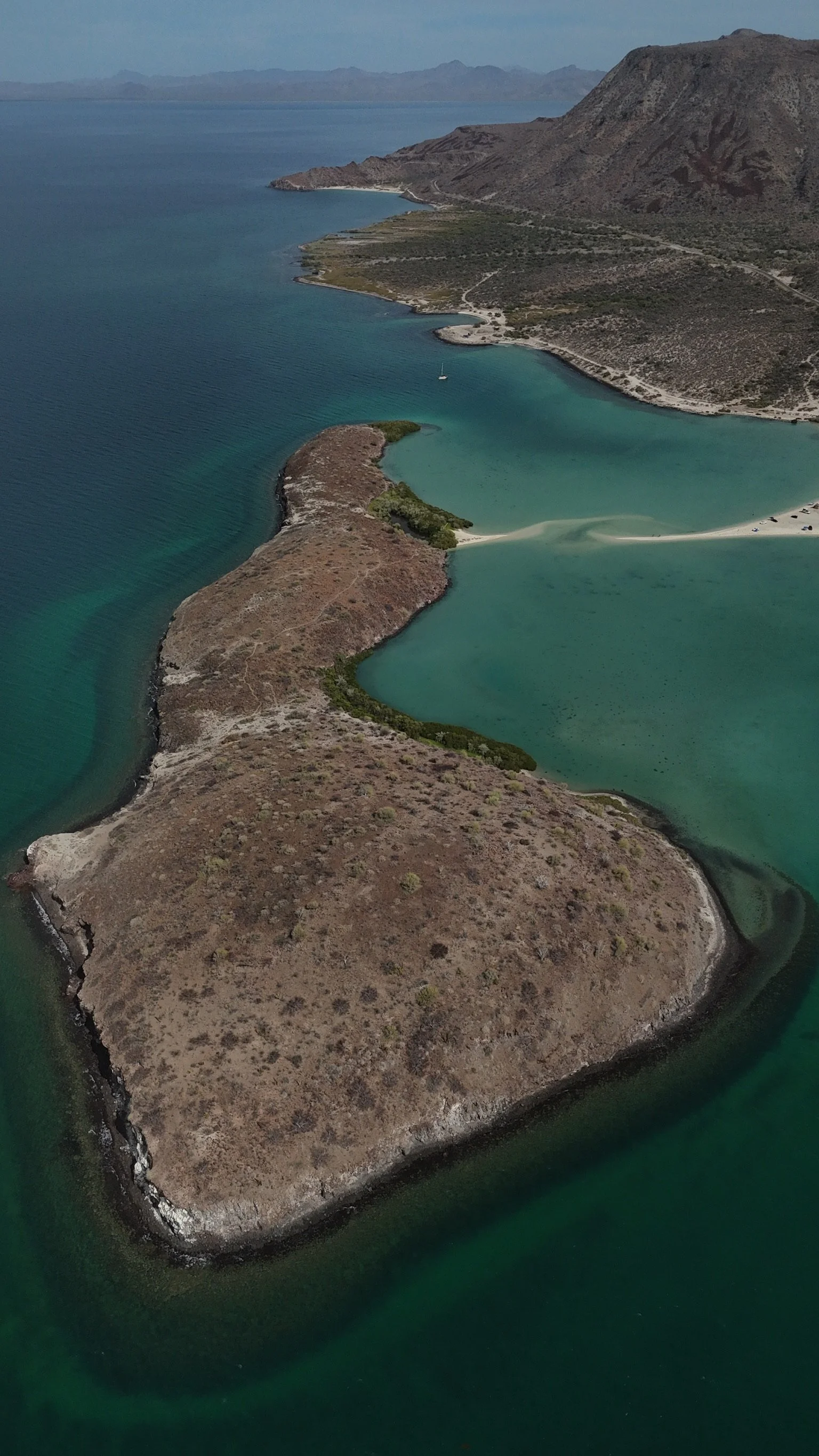
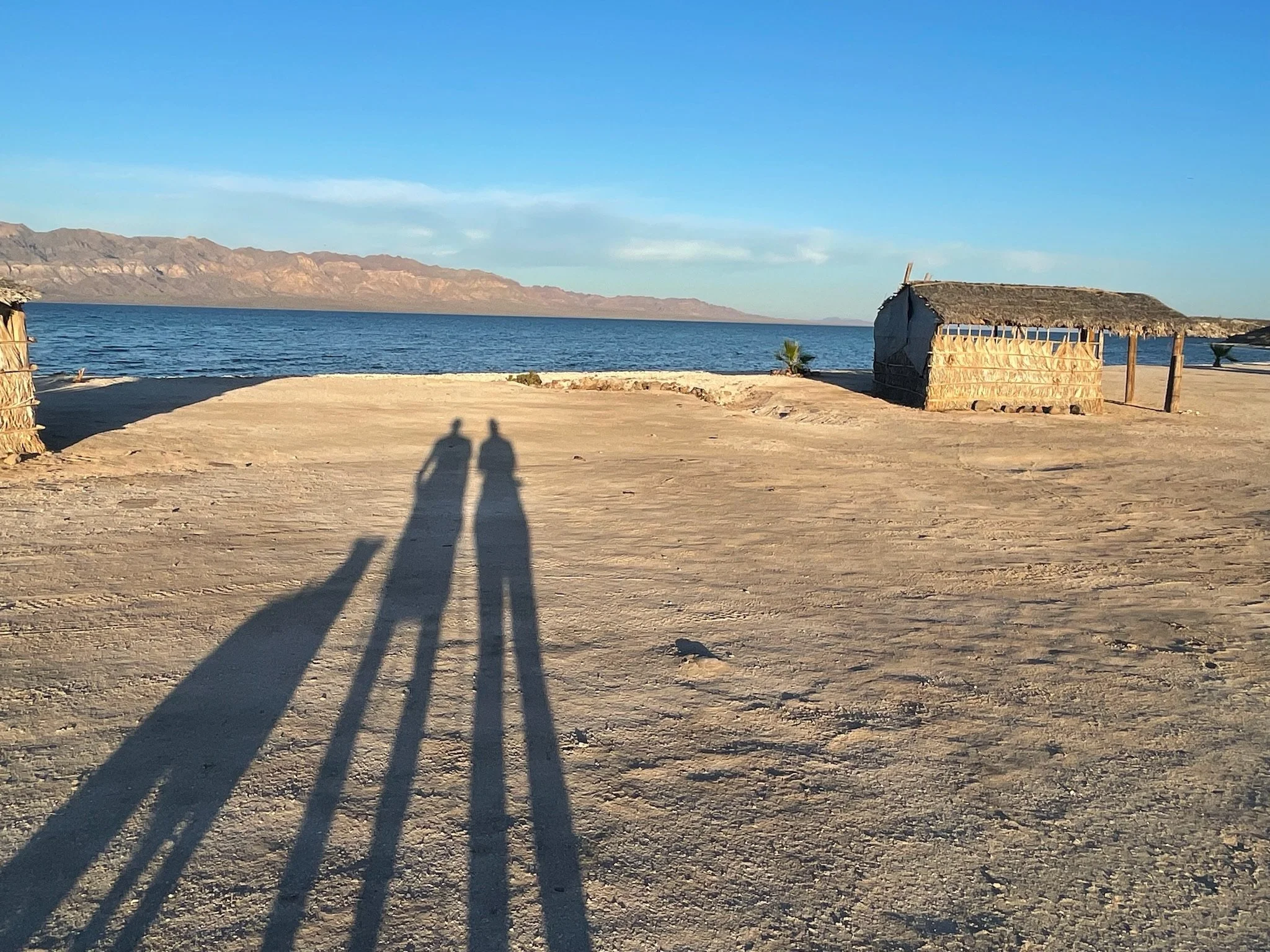
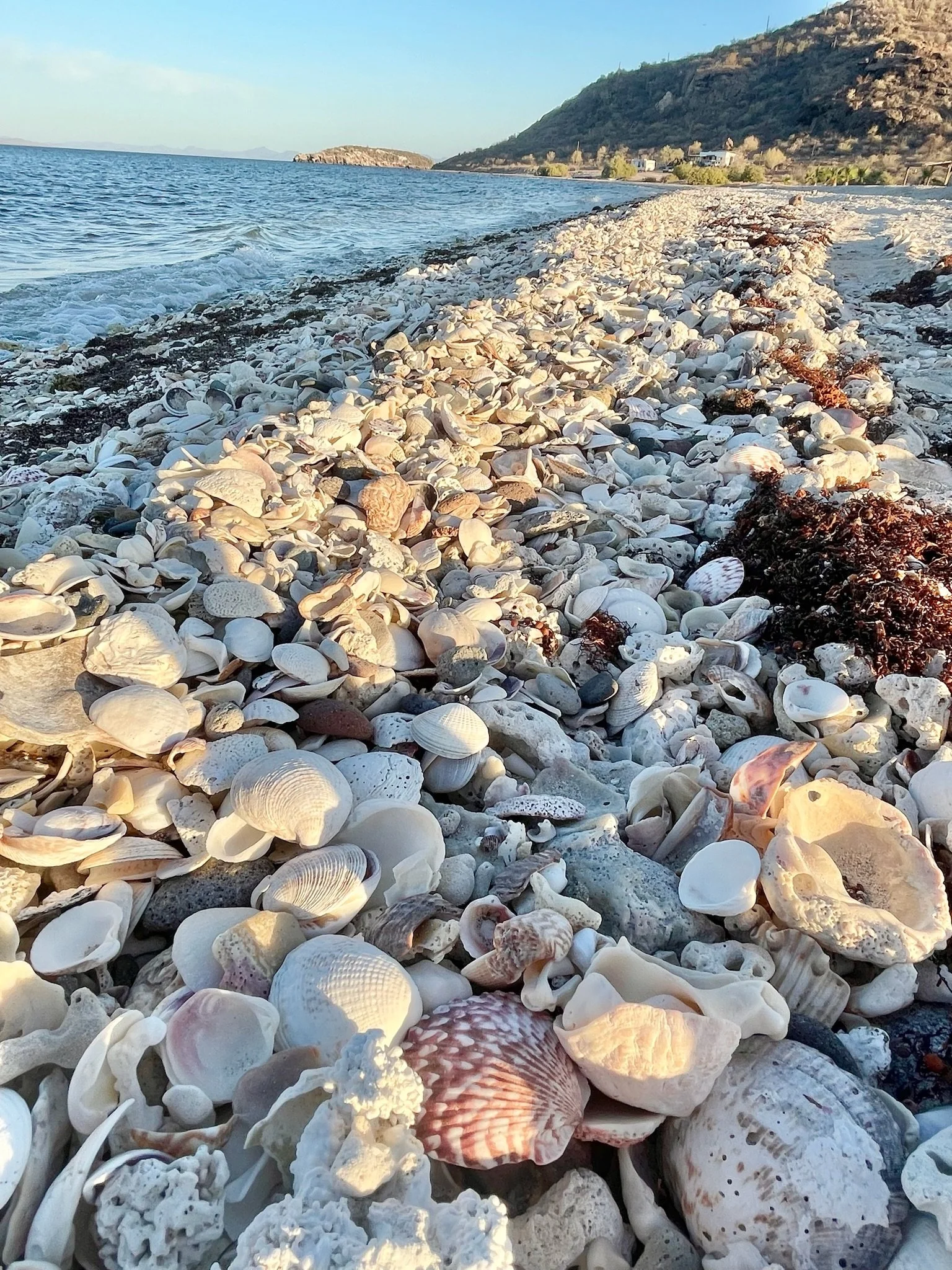
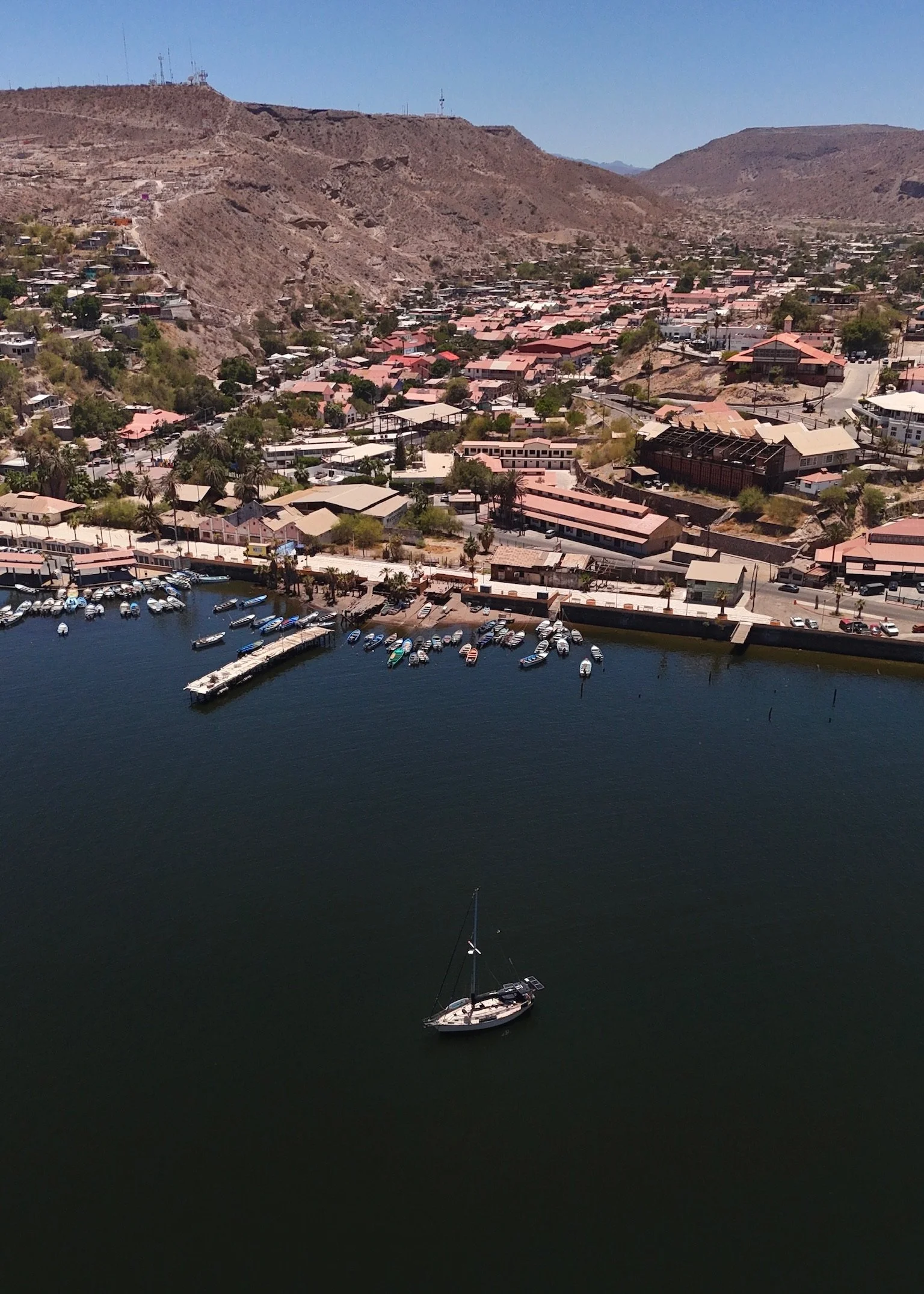
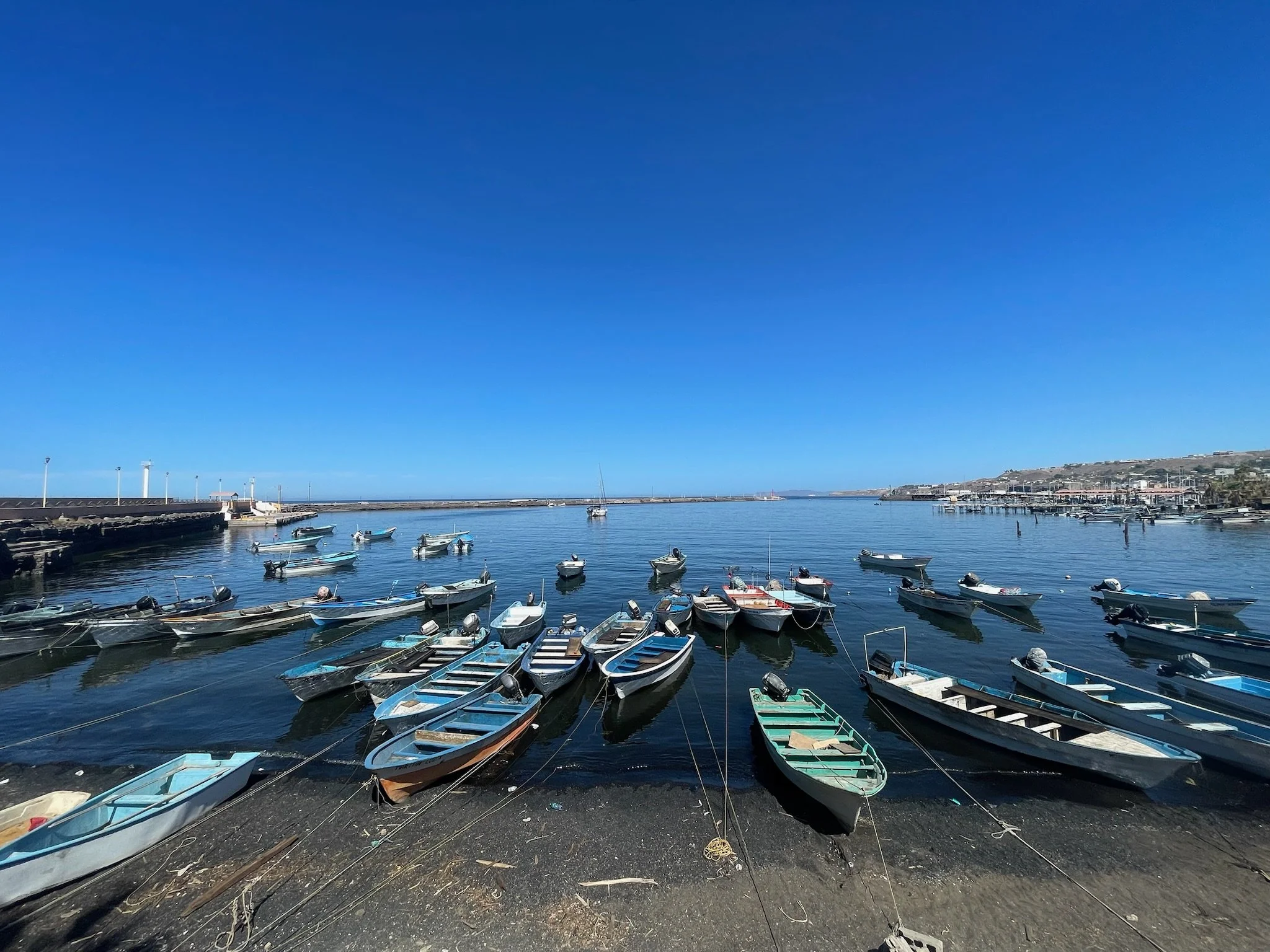
After two days at Requesón, we grew tired of bouncing around every time the wind picked up, and we headed back north for the more protected anchorage of Santispac. The anchorage was quiet and calm, with a good spot to paddle to shore with Desi, decent snorkeling, and a short hike to a secluded beach with more shells than sand. We spent a few days there until favorable weather arrived on May 22nd, and we left Bahía Concepción to head north. Karl sailed the 11 hours north to Santa Rosalia in excellent winds, while I worked below, arriving in the harbor just as I clocked out. Santa Rosalia harbor is protected by a breakwater, and for a moment, Otaria was the stillest she had been in months. But soon after we set the anchor, a seemingly endless stream of pangas began blasting past us, heading out to sea. We found out later that it was the beginning of squid fishing season, resulting in several times the normal number of pangas in the harbor. We spent a couple of days in Rosalia, enjoying a nice dinner out, a walk around the town, meeting some local cruisers, and stocking up on groceries, before departing on Saturday evening to cross the Sea of Cortez to mainland Mexico.
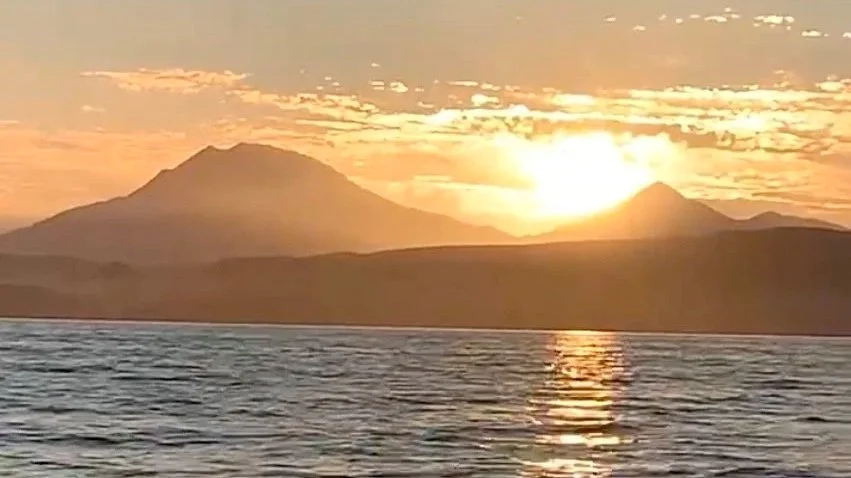
It was our first overnight sail in a couple of months, and we felt a few nerves leading up to the crossing, especially after talking to a sailor who had turned around that morning on his second attempt at the crossing due to rough conditions. Soon, however, we were all smiles as we sailed east in calm seas, looking back at the glow of the sun setting behind the hills of Baja and looking forward to new adventures on the Pacific Mexico mainland.